AI Music Copyright Guide: How Much of Your Suno Song Do You Actually Own?
Can you sell what Suno generated for you? Who holds the rights? How does Pro differ from Free? Terms, law, and practical implications in one place.
TL;DR: how Suno Free and Pro differ on rights
The rights you get over a Suno-generated song depend heavily on which plan you're on. As of the March 26, 2026 revision, Suno's official Terms of Service can be summarized like this — though for any commercial decision, you should read the current Terms page yourself.
- Free plan: you may use the song "solely for lawful, internal, personal and non-commercial purposes, provided that you give attribution credit to Suno." Suno also retains a non-exclusive license that may include reuse for other users or for training future models. Commercial use is not permitted
- Paid plans (Pro / Premier): Suno assigns to you all of its right, title, and interest in the generated Output, granting commercial-use rights on songs you generate. Whether "full copyright" actually vests in you is a separate legal question, since the terms don't guarantee it given the nature of machine learning
The most common misconception is "I typed the prompt, so it's mine." Copyright ownership of an AI-generated work is a different legal question from the license you receive under the Terms — and the answer depends on which country's copyright law you're asking under. This article splits the topic into three layers: Suno's Terms, U.S. and Korean copyright law, and practical workflow. It's general information only. For specific disputes or commercial contracts, consult a lawyer.
I fell into that same assumption when I first started — I wrote the prompt, so surely the song was mine. It wasn't until I sat down and read the Terms carefully that the distinction between a "usage right" and "copyright ownership" clicked, along with just how differently the Free and Pro plans are structured on rights. The reason I split this article into three separate layers is precisely that I went through that confusion once myself.
What Suno's Terms actually say
Suno's Terms of Service (2026 version) address user-generated content and Suno's own rights in separate clauses. Three points matter most.
First, you grant Suno a broad license to use your lyrics, prompts, and uploaded audio. The license covers service provision, improvement, and promotion. Whether the free plan permits use of your inputs for model training has changed wording across revisions, so check the current Terms text directly before assuming.
Second, the rights you receive on generated songs depend on your plan. Pro and Premier assign Suno's full right, title, and interest in the Output to the user, granting commercial-use rights. The free plan grants only personal, non-commercial use and requires attribution credit to Suno. "Granted" here means a usage right — not the same thing as ownership of the copyright.
Third, Suno explicitly acknowledges in the Terms that identical or similar songs may be generated for other users. That means two different users prompting the same way could each receive usage rights to nearly identical tracks. This is an important constraint if you were expecting exclusivity.
Terms get revised over time. Before using any Suno track commercially, re-read the current Suno Terms page and confirm what rights your specific plan grants today — not what they granted six months ago.
What the U.S. Copyright Office says about AI content (2023–2026)
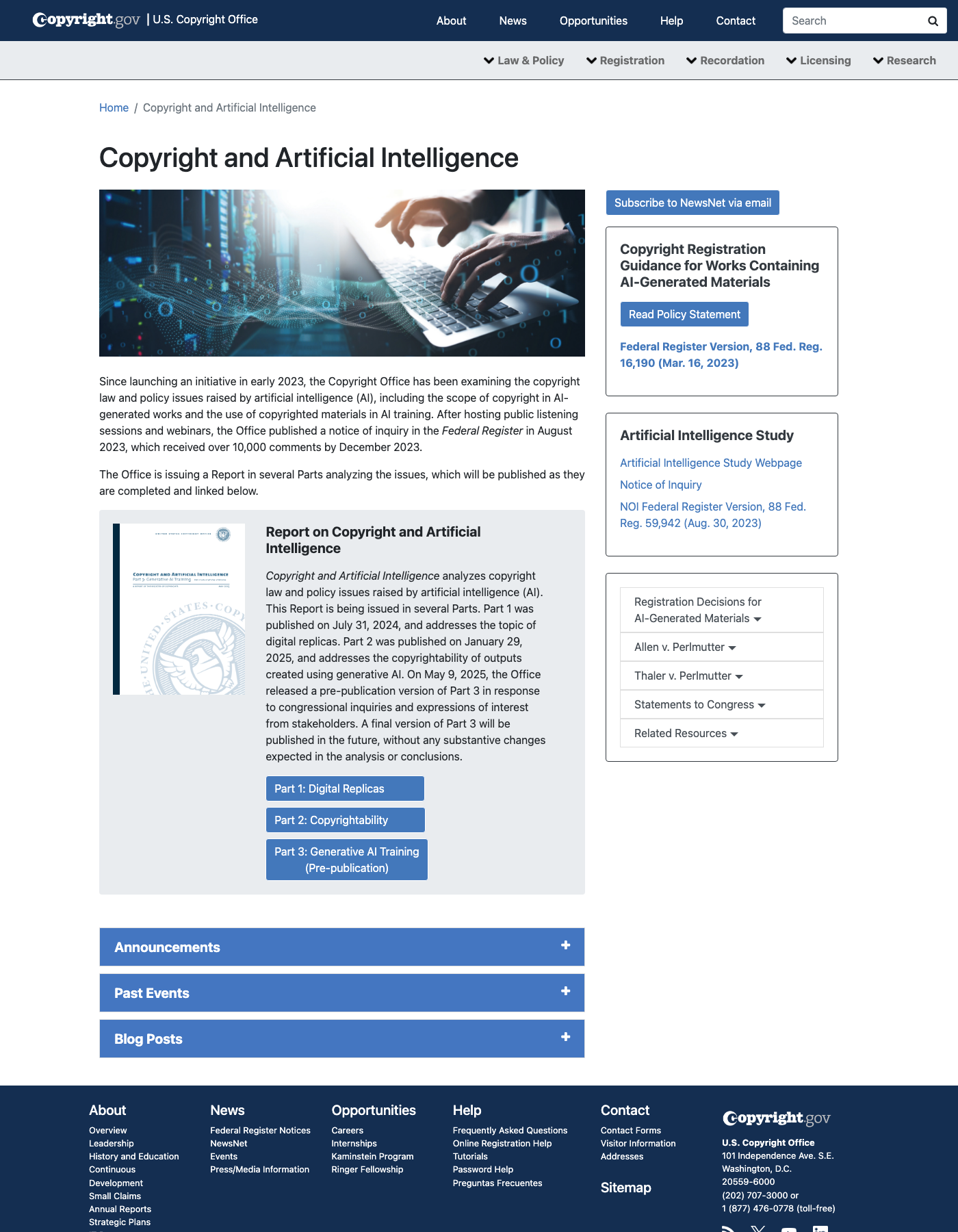
The U.S. Copyright Office issued guidance on registering AI-generated content in March 2023, then refined that position through additional guidance documents in 2024 and 2025. As of 2026, the position breaks down like this.
The Copyright Office maintains the "human authorship" requirement. Pure AI-generated portions of a work aren't eligible for copyright protection. But where a human has meaningfully selected, edited, or arranged the AI's output, that human contribution can qualify for protection. In other words, it's not the AI output itself that's protected — it's the human curation, arrangement, and post-processing layered on top.
For AI music users, this position has two practical consequences. First, the raw audio Suno generated isn't easily registrable as your copyrighted work in the U.S. Second, the more you write your own lyrics, choose between multiple takes meaningfully, and apply DAW post-processing, the more of the resulting work becomes protectable. Lyrics you wrote yourself can also be protected separately as their own copyrighted work — independent of the music.
The Office's stance isn't "AI music has no copyright, period." It's a case-by-case evaluation of how much human creative contribution exists. For specifics on whether your track is registrable, check the Copyright Office's published guidance and talk to a copyright attorney.
Korean copyright law and AI-generated works
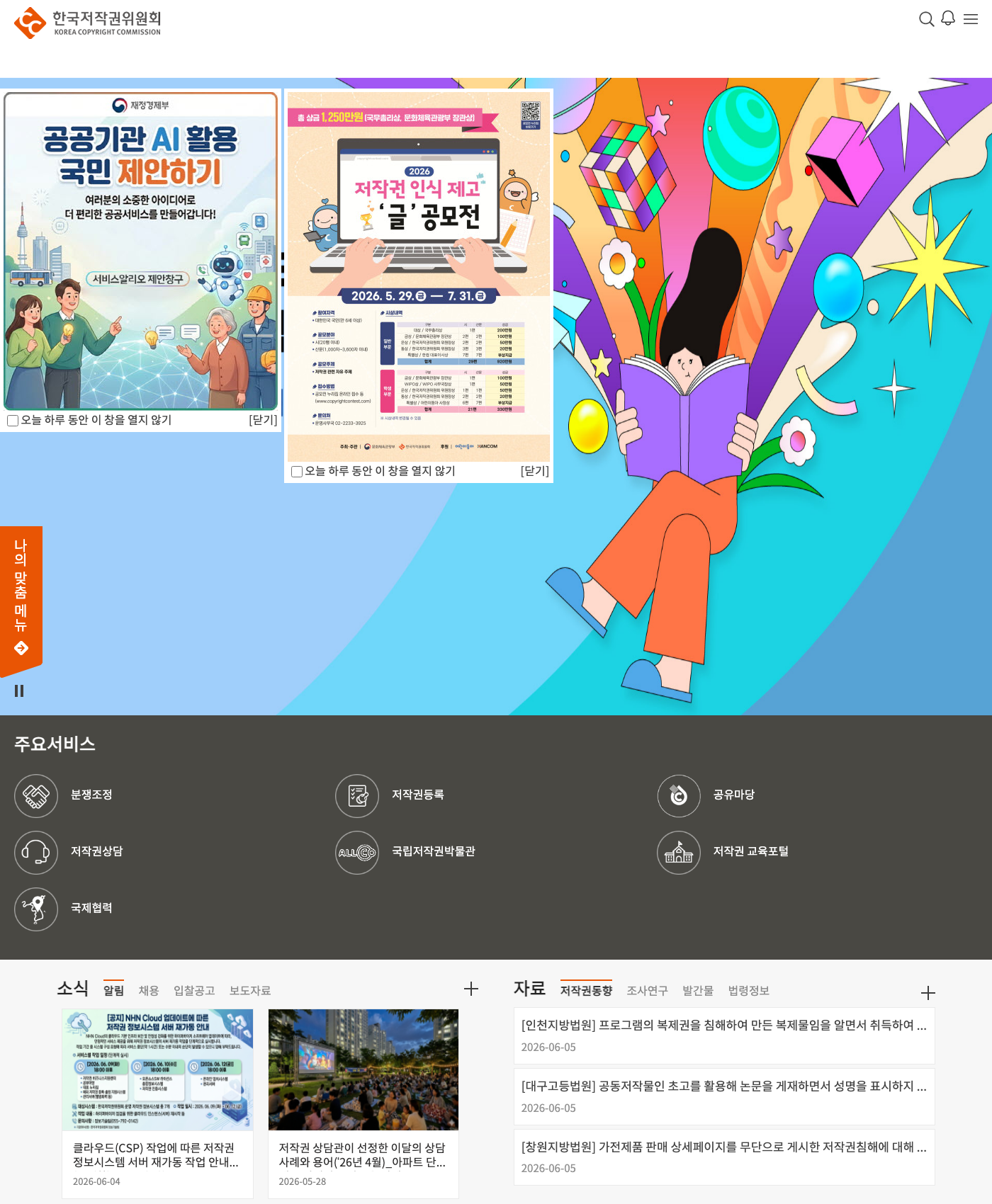
Korea's Copyright Act (as of 2026) defines a copyrighted work in Article 2 as "a creative work expressing human thoughts or emotions." The dominant reading of that definition is that pure AI-generated works don't qualify as protectable works in Korea either. The Ministry of Culture, Sports and Tourism and the Korea Copyright Commission released a "Guide to AI-Generated Outputs" across 2023 and 2024 that aligns with this reading.
As in the U.S., Korea's test centers on "meaningful human creative contribution." Lyrics, arrangement, selection, and ordering where a human meaningfully intervened can be protected. Portions that are purely AI-generated fall outside protection. This distinction is case-by-case, so any specific legal question warrants a lawyer's review.
There's a wrinkle in Korea worth flagging: the rights of phonogram producers (neighboring rights). Separate from copyright in the work itself, Korean law recognizes rights for the person who actually produced and fixed the recording. If you mastered the AI-generated track in a DAW and fixed it as a recording, you may be entitled to phonogram producer rights even if the underlying composition isn't protected. This is a Korea-specific angle worth knowing.
Both the U.S. and Korea are evolving their AI copyright positions quickly. What's true in 2026 may not hold a year from now. For commercial projects, verifying the current legal interpretation with a lawyer is the only safe approach.
Writing your own lyrics vs. auto-generating them
How the lyrics are written makes a real difference on the copyright side. Three scenarios:
- You wrote the lyrics yourself: the lyric is a human work and is protected in both Korea and the U.S. Even if the melody and accompaniment came from AI, the dominant reading is that the lyric text remains your copyrighted work
- Suno's
Generate Lyricsauto-generated them: the lyrics themselves are AI-generated, so protection on the lyric is narrow. If you meaningfully edited the auto-generated draft, the edits you made may be protectable - Your lyrics + AI melody and accompaniment: the lyric is protected, the melody and accompaniment have narrow protection. Claiming the full song as your protected work is difficult, but your lyric ownership is clear
If you have commercial intent, write the lyrics yourself. The full lyrics-writing workflow lives in Suno AI Lyrics Prompting. Hand-written lyrics give you better copyright footing and better track quality than auto-generated ones.
If a dispute arises, you may need to prove the lyrics are yours. Keep drafts, revision history, and timestamps. Version-controlled files (Git) or note-taking apps with edit history (Notion, Obsidian) work well as evidence.
Commercial-use checklist
A pre-flight checklist before commercializing a Suno track. General information only — for specific contracts or licensing, get a lawyer involved.
- Re-read the current Terms for your plan — gray-zone Free vs. explicit commercial rights under Pro / Premier
- Document whether each track's lyrics were written by you or auto-generated by Suno
- Acknowledge that other users could generate similar tracks from similar prompts — this is stated in the Terms
- Check the AI-music policy of the platform you're uploading to (YouTube, Spotify, Bandcamp) — separate from Suno's Terms
- Scan for similarity with existing well-known songs — plagiarism risk is independent of the Terms
- Confirm whether tax and contract filings will recognize the recording as "your original work" in your jurisdiction
- Have a path to a lawyer ready in case of a dispute
A value analysis of the Pro plan lives in Is Suno Pro Worth It?. For commercial projects, paying for Pro or higher to escape the Free plan's gray zone is the safer call.
Metadata disclosure for YouTube, Spotify, and others
Platform AI-music policies were heavily revised between 2024 and 2026. As of 2026, the major platforms sit roughly here. Policies change frequently, so check the latest policy page before each upload.
YouTube introduced a disclosure requirement for "synthetic or altered content" (AI-generated content) starting in 2024. If AI music is the main audio or a meaningful portion of the video, you're expected to check the disclosure option on upload. Pure background music is a gray zone where the disclosure obligation is unclear. The safe move is to check YouTube's current policy page and disclose conservatively.
Spotify and Apple Music are reached through distributors (DistroKid, TuneCore, CD Baby). Each distributor's AI-music policy is different. As of 2025, DistroKid still allows AI music but began requiring "AI generated" disclosure in metadata. Spotify rolled out enforcement against bulk AI uploads in 2024, and policy for normal users continues to evolve.
Disclosing "AI generated" in metadata serves two purposes. First, platform-policy compliance. Second, in a dispute it documents that you didn't conceal the work's origin, which weakens plagiarism-intent claims. A conservative approach: include something like "Generated with Suno AI" in the track description and metadata. Whether to mark the title itself is a marketing and SEO question, decided separately.
The full YouTube workflow lives in Using Suno AI Music in YouTube Content, with Content ID, monetization policy, and failure cases broken down by scenario.
Dispute patterns — plagiarism suspicion and source tracing
AI-music disputes have piled up between 2024 and 2026. Three representative patterns. Case-specific outcomes vary; this is general framing only.
First, training-data source disputes. In 2024, major U.S. record labels filed suit against Suno, Udio, and other AI-music services alleging unauthorized use of their catalogs as training data. The cases were still active as of 2026, and the outcome will likely affect Terms language and user rights across the industry. As a user, the practical move is to track these cases and watch for changes in your usage rights.
Second, similarity disputes between an AI-generated song and an existing one. A track generated from a prompt sometimes lands close to the melody or chord progression of a hit song. Even without intent, you can be accused of plagiarism. Before releasing a track, run it through Shazam or SoundHound to check whether it matches anything already published.
Third, user-vs-user disputes over near-identical tracks. As the Terms acknowledge, two users prompting similarly can generate near-identical songs. If user A releases a track in June and user B released a similar track in May from the same prompt, who has priority isn't well-established. Case law for this scenario hasn't formed yet.
The cumulative safety procedure: write the lyrics yourself, layer meaningful human editing and post-processing on the AI-generated melody and structure, scan for similarity before release, and disclose AI generation in the metadata. If a dispute still arises, you'll want a lawyer.
Frequently asked questions
Can I use a Free-plan track as YouTube BGM? It depends on which version of the Terms applies. As of the March 26, 2026 revision, Suno's Free plan grants only personal, non-commercial use and requires attribution credit to Suno. If your YouTube channel is monetized, that may qualify as commercial use, in which case upgrading to Pro is the safer call. Confirm the exact wording in the current Terms before relying on this.
Does Suno Pro give me 100% copyright on the track? "Usage rights" and "copyright ownership" aren't the same thing. Pro grants commercial-use rights, but whether copyright ownership actually transfers depends on the copyright law of your jurisdiction. Both the U.S. and Korea hold that pure AI-generated works have narrow copyright protection.
I wrote the lyrics but the melody is AI. Do I own the lyrics? The dominant reading is yes — the lyric text is a human work and is protected. You can register the lyric separately. The rights to the full song are a different matter.
What happens to my old tracks if I cancel my subscription? Like most SaaS, rights granted before cancellation usually survive cancellation, but the specifics live in the Termination clause of Suno's Terms. Confirm whether commercial-use rights on tracks generated during the Pro period persist post-cancellation.
Can I formally distribute an AI track in Korea? The distribution itself works through any standard distributor. Whether to file it as "composed and written by you" versus "AI collaboration" is your call. Distribution and copyright protection are separate processes — distributing a track doesn't automatically register it as protected.
What do I do if a dispute arises? Get a lawyer. Copyright, platform policy, and contract disputes are separate specialties, and outcomes turn on the facts of each case. This article is general information, not legal advice.
 Once the track is made and the rights position is sorted, the next step is using it. Is Suno Pro Worth It? breaks down the rights and feature value of the Pro plan, and Using Suno AI Music in YouTube Content covers monetization workflow on YouTube. When the track is finished, SunoDown downloads your own creations in lossless WAV or MP3 in one click.
Ready to try it?
Open SunoDown →